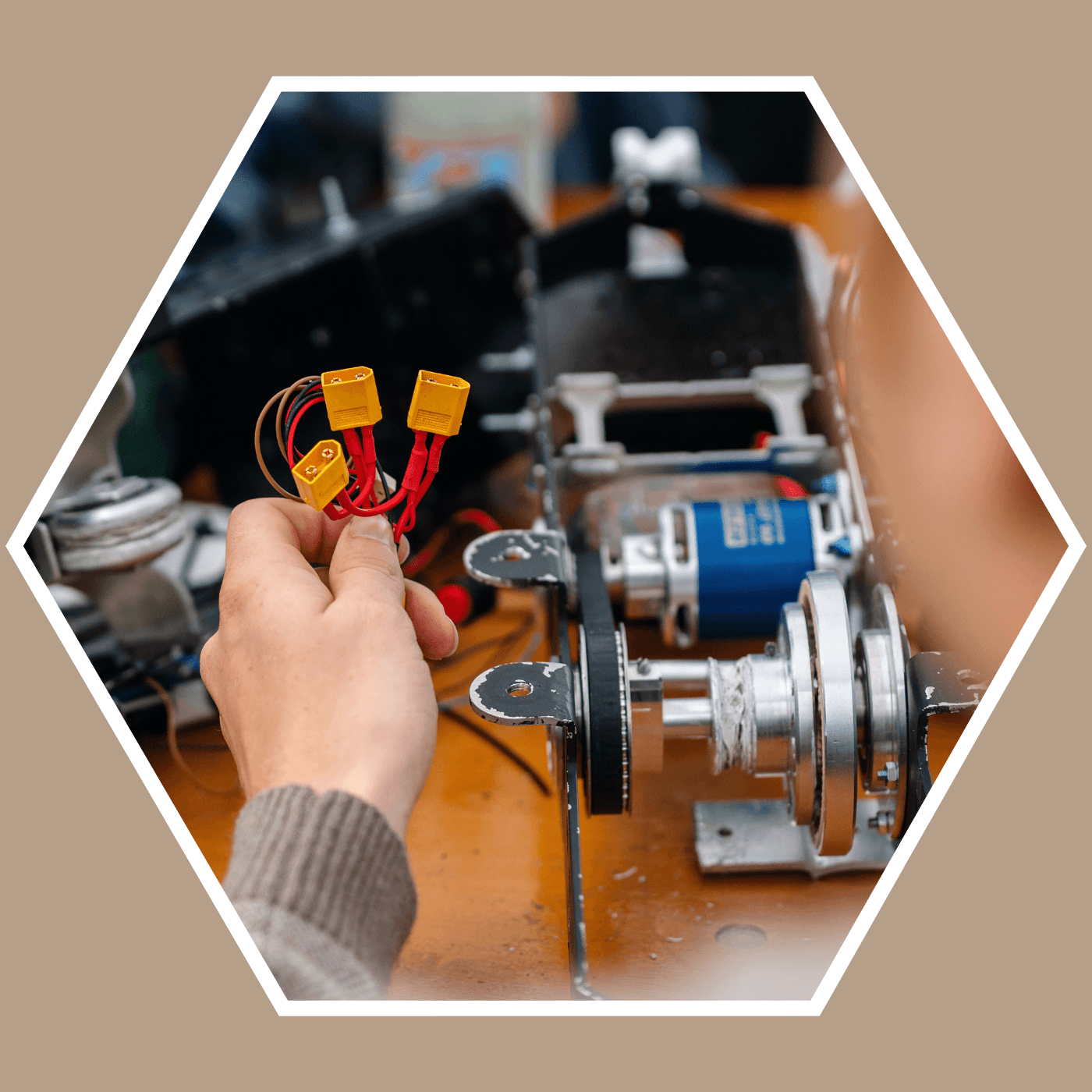
From mechanical design to control systems, this challenge is all about building robotic climbers capable of ascending a vertical tether. Teams must combine precision, power, and adaptability to simulate the vehicles that could travel from Earth to orbit.
Tether Climber Competition
From mechanical design to control systems, this challenge is all about building robotic climbers capable of ascending a vertical tether. Teams must combine precision, power, and adaptability to simulate the vehicles that could travel from Earth to orbit.
Tether Climber Competition
From mechanical design to control systems, this challenge is all about building robotic climbers capable of ascending a vertical tether. Teams must combine precision, power, and adaptability to simulate the vehicles that could travel from Earth to orbit.
Engineering the Climb
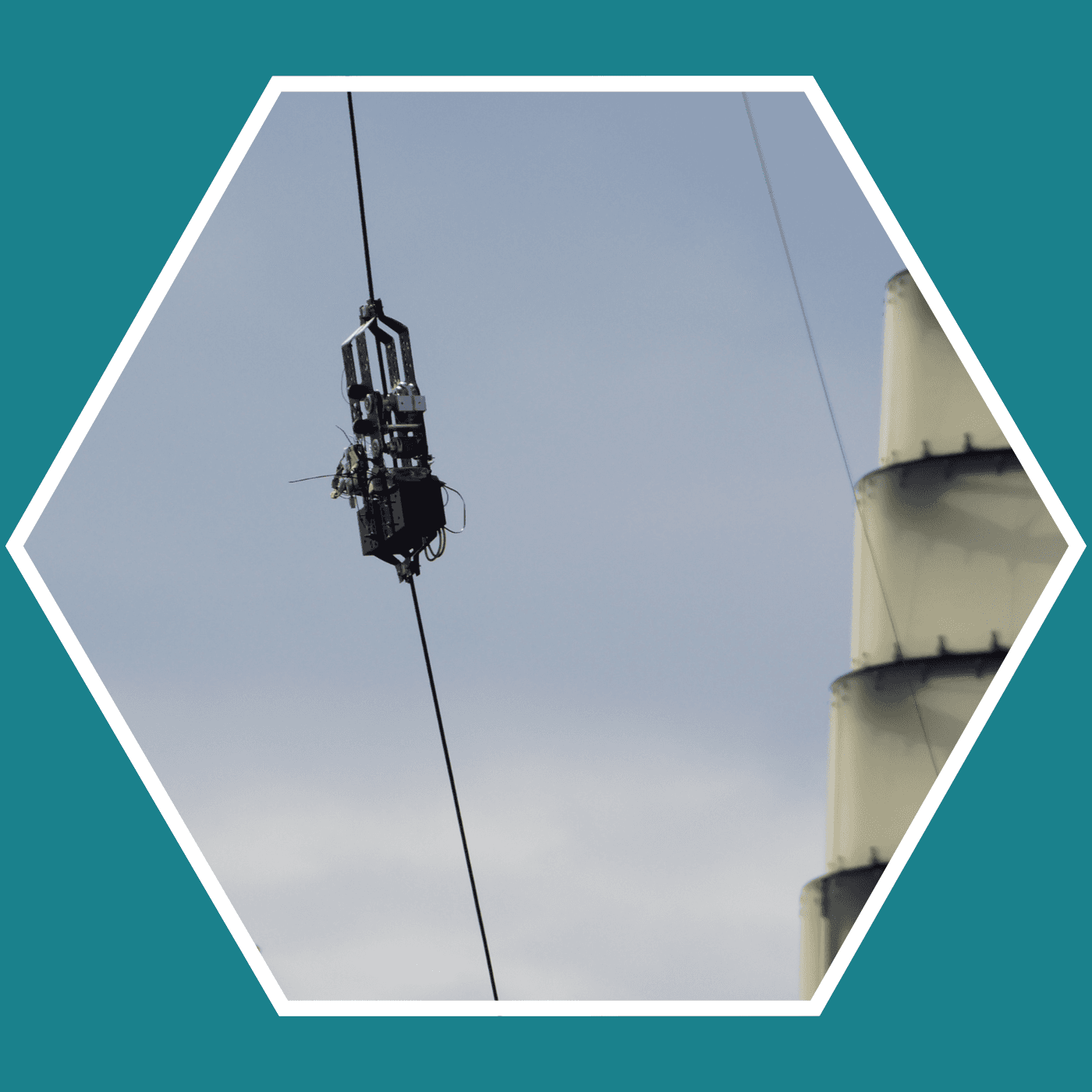
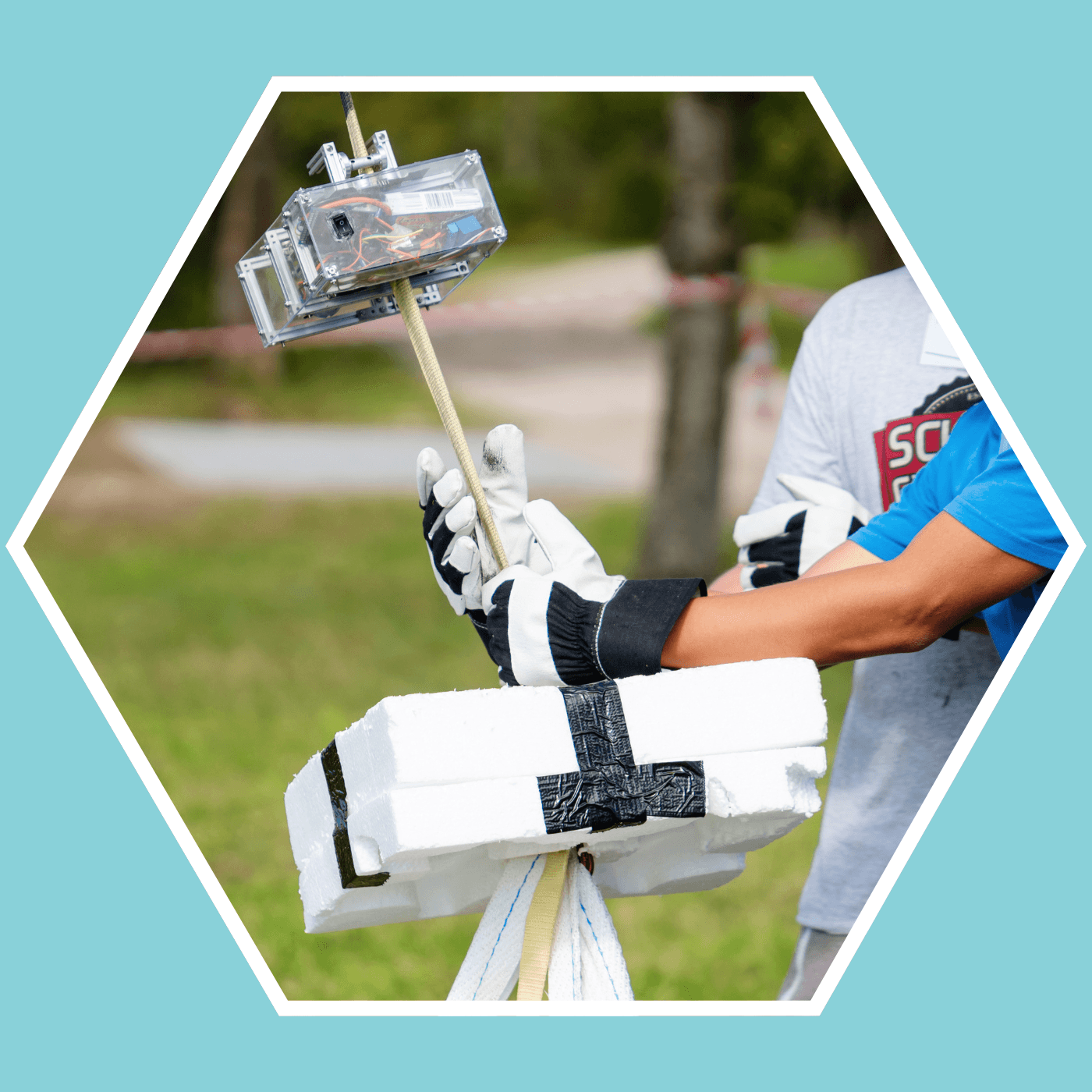
The Climber Competition is the headline challenge of WSPEC. It tasks teams with building robotic climbers capable of ascending a vertical tether while transporting a payload using only stored electrical energy.
The heart of the system
As a critical component of the space elevator concept, climbers must be efficient, reliable, and capable of operating in extreme conditions over long distances. Their development involves challenges in robotics, materials, power systems, and control, making them a central focus in turning the vision of continuous, scalable space access into reality.
the challenge
Design, build, and operate a tether-climbing robot that
Ascends a vertical flat tether under its own stored electrical power
Ascends a vertical flat tether under its own stored electrical power
Ascends a vertical flat tether under its own stored electrical power
Carries a set of standardized payload cubes
Carries a set of standardized payload cubes
Carries a set of standardized payload cubes
Operates safely and reliably, either autonomously or under ground control
Operates safely and reliably, either autonomously or under ground control
Operates safely and reliably, either autonomously or under ground control
Climbers must complete a valid run to the top of the tether, carrying a minimum payload, and come to a stop under defined control conditions .
Competition Cycle
To give every team adequate time to engineer high-performance solutions, every competition in our season follows the same lifecycle. This structure allows teams to plan their academic year around the planning, building, and competitions with certainty.
Applications Open▼
8 Months Out
Rulebooks are released. Teams should begin finalizing their strategy and securing fundraising to prepare for the build cycle.
Development Phase▼
6 Months Out
Teams should be fully registered by this stage to maximize engineering time and focus on prototype development.
Qualification Phase▼
2 Months Out
Applications close and technical proof is due. Teams must submit video footage or CAD models to prove compliance and pay final admission fees.
The Competition▼
Event Month
Teams travel to the on-site competition to test their prototypes in a real-life environment, verifying their performance data against peers in a live, real-world scenario.
Knowledge Share▼
1 Month Post-Event
Teams contribute to the ecosystem by submitting a wrap up report, outlining their technical journey and share findings that raise the standard for future competitions.
Competition Cycle
To give every team adequate time to engineer high-performance solutions, every competition in our season follows the same lifecycle. This structure allows teams to plan their academic year around the planning, building, and competitions with certainty.
• Max total mass: 50 kg (climber + payload)
• Dimensions: 1m x 1m footprint, max 2m height
• Center of gravity: Must stay within ±100 mm of the tether (X/Y axes)
• Tether: Flat, 35 mm wide, 2 mm thick, para-aramid fiber
Accepted Technologies / Restrictions
• Only stored electrical energy is permitted
• No chemical propulsion or aerodynamic lift
• Climber must stop automatically at the top and when input is lost
• Payload cubes and data-logging units (PlMU) provided by organizers
Environmental Conditions
• Competition is hosted outdoors unless otherwise stated
• Climbers must function in ambient weather conditions
• No manipulation of the tether is allowed during installation
What is the process for entering the WSPEC competition?
The competition has two main stages:
1. Application & Technical Plan – The first step is to officially enter the competition and submit a technical plan for your climber. During this stage, teams are encouraged to raise funds, secure sponsors, and refine their designs.
2. Pre-Competition Verification – About three months before the competition, teams must submit video footage showing their climber in testing. At this point, an application fee of $1,000 applies. We understand funding can be a challenge, so fee waivers or partial reductions are possible, please reach out to us for assistance. Our goal is to ensure that every team is prepared to compete successfully.